Block clearing in Perth and Mandurah: what's involved and what changes the price
Two blocks the same size can quote very differently. Vegetation, soil, slope, access, what happens to the material and the finish you need all move the number, here's how each one works.
Two blocks the same size, ten minutes apart, can come back with quotes that look nothing like each other. That is not contractors picking numbers out of the air. Block clearing prices move on a handful of specific things, and most of them are visible before anyone turns up.
Here is what actually drives the number, so you can judge a quote properly and give us enough to be accurate first time.
What block clearing usually covers
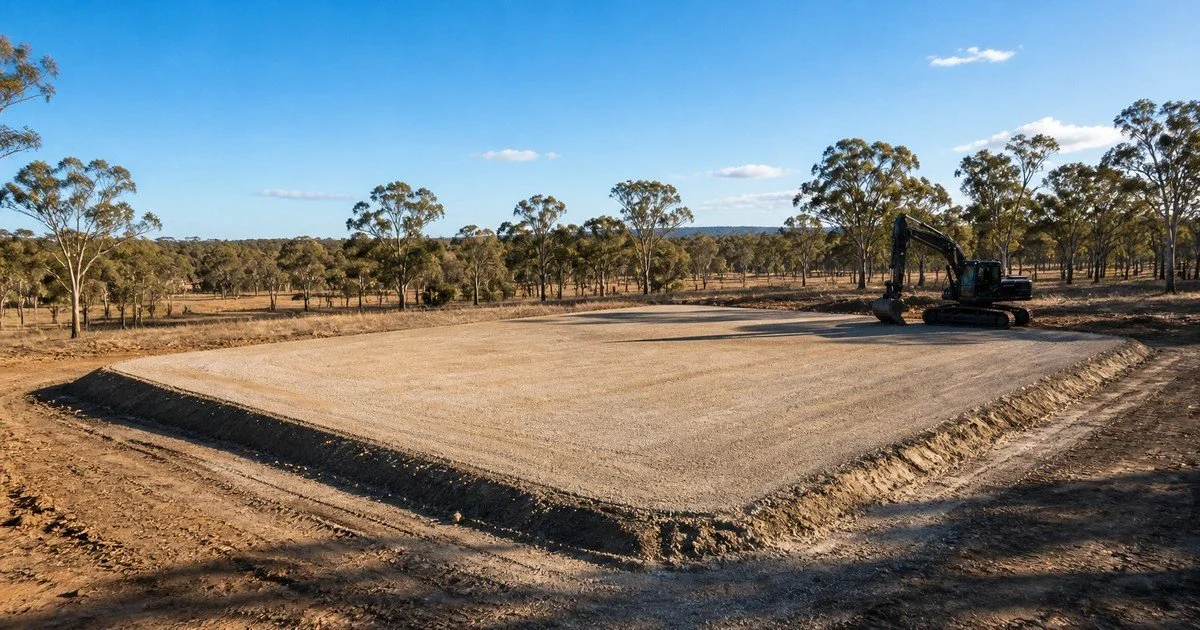
“Block clearing” gets used loosely. On most jobs it means removing standing vegetation, dealing with the material that comes off, and leaving a surface that suits whatever happens next. It may or may not include stump removal, levelling, drainage or trucking material off site, and that difference alone can double a quote.
Before comparing prices, check that both quotes cover the same scope. A cheap number that leaves stumps in the ground and windrows around the boundary is not the same job.
What changes the price
1. Vegetation type and density
Light grass and scrub is quick. Dense coastal heath, thick regrowth, or mature trees with substantial trunks all take longer and sometimes need different machinery. The number of large trees matters more than total area on many blocks. One big jarrah can take longer than an acre of low scrub.
2. Soil
The Perth coastal plain is largely sand. Further inland and through the hills you hit clay, gravel and rock. Sand tracks easily but is unstable once disturbed and can slump around excavations. Clay holds shape but gets heavy and greasy when wet. Rock changes the method entirely and is the one thing most owners do not know is there until digging starts.
3. Slope and access
A flat block with a wide gate off a sealed road is the cheapest scenario. Steep ground, a narrow gate, low powerlines, a soft approach or no room to turn all change which machine can be used and how long setup takes. Access is the single most common reason a quote changes after a site visit, so it is worth measuring your narrowest gate before you call anyone.
4. What happens to the material
Cleared vegetation has to go somewhere, and this is often the largest single variable. Eco-mulching processes it on site and spreads it back as mulch. There are no trucks or tip fees, and it helps hold sandy ground together. Carting off costs more because you are paying for machinery, haulage and disposal, but it is the right answer when the material is unsuitable, the finish needs to be clean, or there is no room to leave it.
5. Stumps and root systems
Cutting at ground level is quicker and cheaper than removing the root ball. Whether you need full removal depends entirely on what comes next: a shed pad or driveway generally does; leaving the block as paddock generally does not. Decide this before quoting, because it is a real cost difference.
6. The finish you need
“Cleared” covers a wide range. A rough clear for fire management is not the same as a graded, levelled surface ready for the next trade. Be specific about what the block needs to support, because the finish drives the last part of the job.
7. Site constraints
Underground services, septic systems, bores, retained trees, fences, sheds and neighbouring structures all slow work down and sometimes dictate the approach. Anything that has to be worked around rather than through adds time.
Why Perth and Mandurah blocks differ
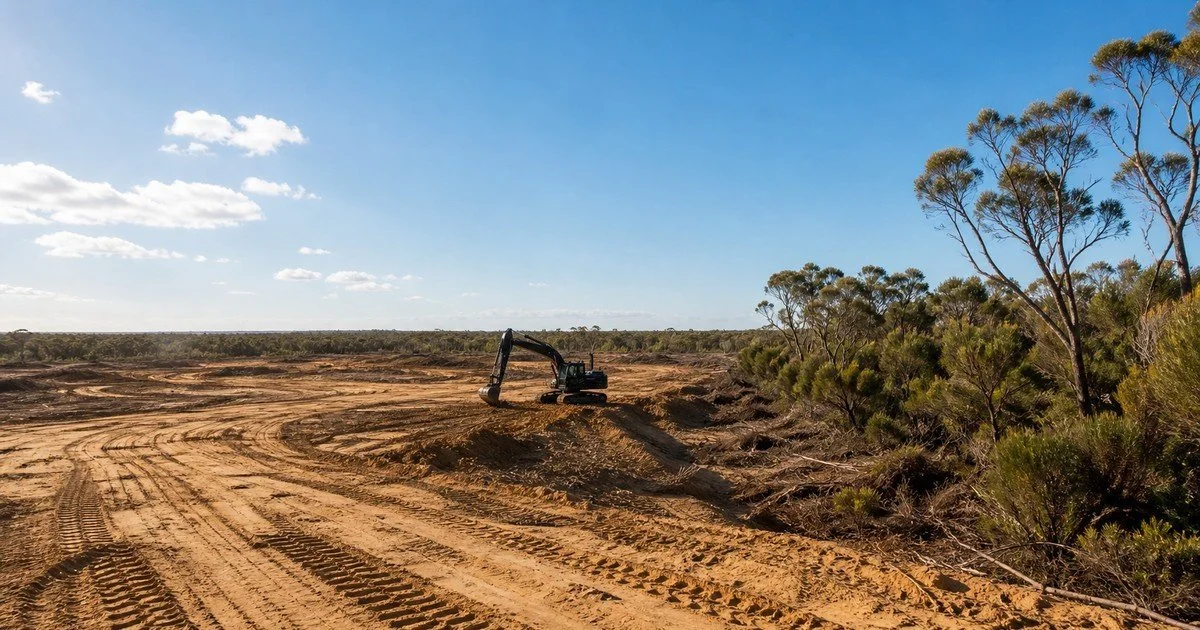
Around Mandurah, Dawesville and the southern coastal suburbs, most blocks are sand with low coastal scrub and banksia. Clearing is usually straightforward, but the cleared surface moves easily and stabilising it matters more than people expect. Mulching on site is often the better call for exactly that reason.
Through the Perth Hills, expect heavier vegetation, gravel and rock, steeper ground and tighter access. Same block size, very different job.
Across the South West, blocks tend to be larger with heavier timber, and the practical question becomes what gets retained rather than how fast the lot can come down.
What you can do to keep the cost sensible
- Book outside the rush. Spring is the busiest window. Quoting in late winter usually means better availability.
- Clear the access first. If a gate can be widened or an approach firmed up cheaply, it may save more than it costs.
- Mulch on site where it suits. Avoiding haulage and disposal is often the biggest saving available.
- Be clear about the finish. Paying for a graded surface you did not need is money gone.
- Do it in one visit. Splitting clearing, stumps and levelling across separate mobilisations means paying setup costs more than once.
What to send us for a block clearing quote
- Property address or suburb
- Approximate block size, or the area needing clearing
- Photos of the vegetation, and of the access from the road to the work area
- The width of your narrowest gate
- What the block needs to do afterwards: build, paddock, fire management, resale
- Anything to be retained or avoided
- Whether stumps need to come out
- Your timing
That is usually enough for a realistic range before anyone drives out.
Common block clearing questions
How much does block clearing cost per acre?
There is no reliable per-acre figure, which is why you should be cautious of anyone offering one sight unseen. Vegetation density, soil, access and the required finish move the number far more than area does. A quote based on a site inspection or good photos will be closer than any rate card.
Do I need approval to clear my block?
Sometimes. Clearing native vegetation in WA can require a permit, and some local governments have their own controls. This is separate to any firebreak obligation. Check before work starts rather than after.
Can you clear around trees I want to keep?
Yes. Selective clearing is normal work. Mark what stays, and the plan is built around access to and protection of those trees.
Is mulching always cheaper than carting away?
Usually, but not always, and it is not always appropriate. Suspected declared or invasive species need separate handling, and some finishes need the material gone entirely.
How long does a block take?
It depends far more on vegetation and access than size. Once we have seen photos we can give you a realistic duration rather than a guess.
Block clearing across Perth and the South West
We handle land and block clearing on residential, acreage, rural and commercial properties across Perth, Mandurah and down through the South West. Because we also do the earthworks, the clearing can be finished to whatever the next stage actually needs rather than stopping at a rough surface.
Send through the address and a few photos and we will give you a straight answer. Get in touch or call 0499 910 019.
This guide is general information about what affects block clearing costs in Western Australia. It is not a quote and does not constitute advice on your property. Every block needs its own assessment, and approval requirements should be confirmed with the relevant authority before work begins.