Mulch it, remove it, or leave it: choosing a vegetation finish
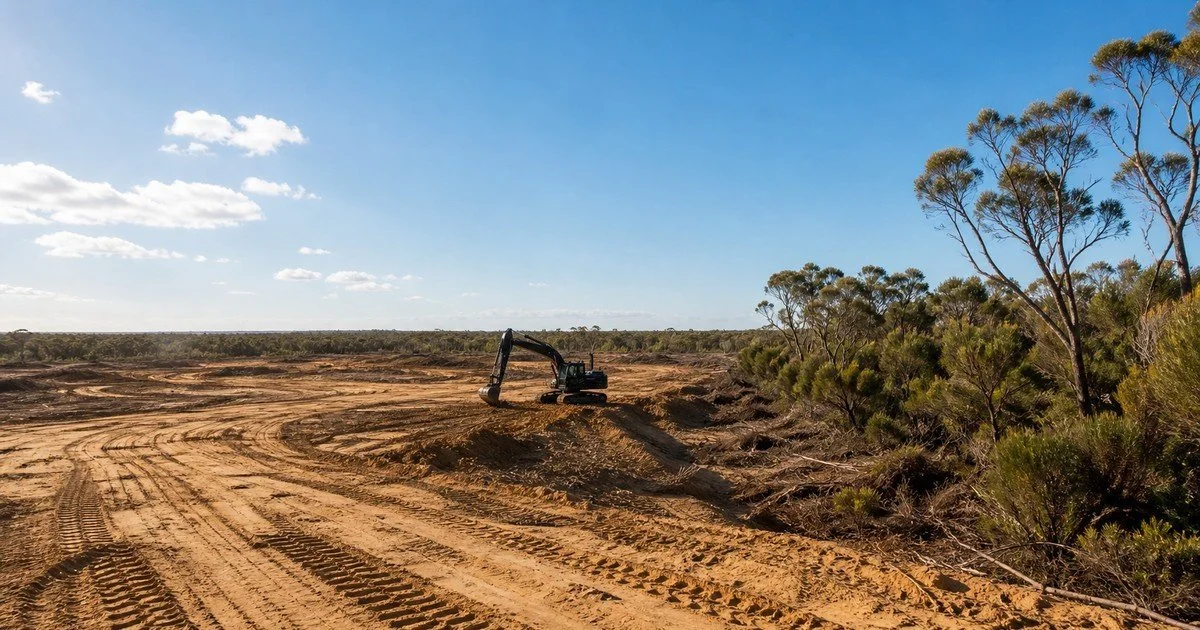
Cleared vegetation ends up one of three ways: mulched on site, carted off, or left in place. Which one suits depends on the plant, the finish you need and the room you have.
Clearing gets most of the attention. What happens to the material afterwards usually costs more, and it is the part people think about last.
Cleared vegetation ends up one of three ways: processed on site as mulch, carted off, or deliberately left in place. Each suits different situations, and getting it wrong is expensive in one direction and untidy in the other.
Mulching on site
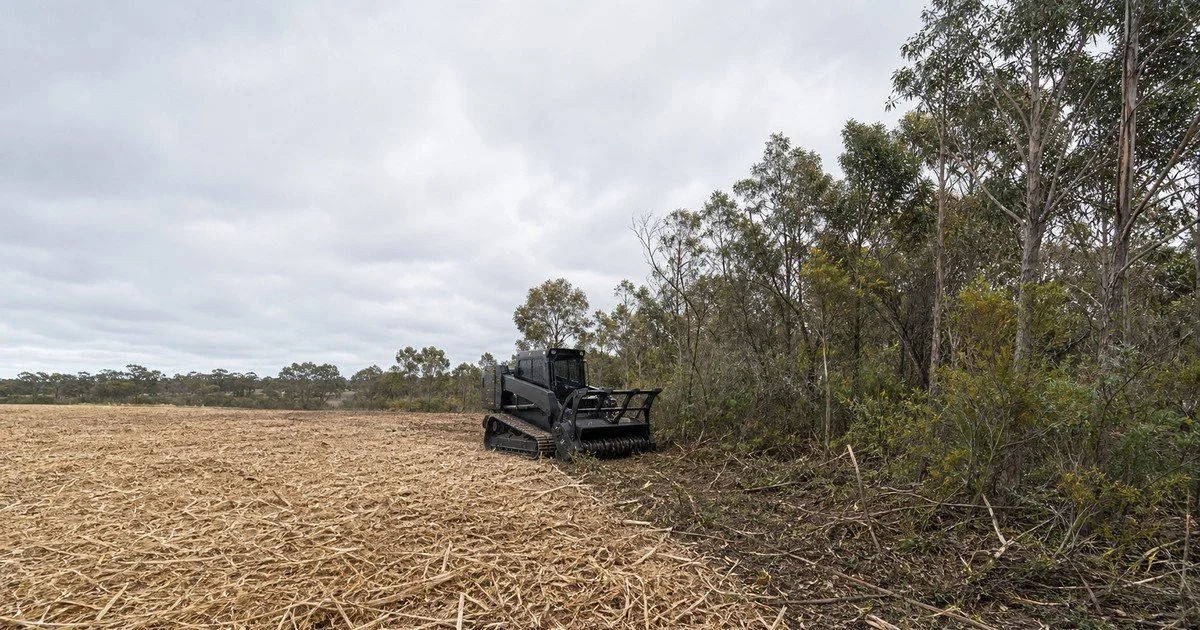
Eco-mulching processes standing vegetation where it grows and spreads the result across the ground as a layer of mulch. No trucks, no tip fees, and the material stays on the property.
It works well when:
- The vegetation is suitable: scrub, regrowth, small to medium timber
- The block can carry a mulch layer without it being in the way
- You want ground cover, which on sandy country genuinely helps hold the surface together and slows moisture loss
- Access is tight, because one machine does the whole job in a single pass
It works less well when: the block needs a clean finished surface, the timber is too large to process economically, the mulch depth would interfere with what comes next, or some of the vegetation should not be spread around the property at all.
Carting it off
Removal costs more, because you are paying for the machinery, the haulage and the disposal. It is the right answer when the finish has to be clean: a building site, a pad, or anywhere a mulch layer would have to be stripped again later. It is also the answer where there is simply nowhere to put the material.
The cost is driven more by volume and distance than by area cleared. Dense vegetation on a small block can generate more truck movements than light scrub across several acres.
Leaving it in place
Sometimes the right call is not to clear at all, or to clear selectively and leave the rest. Retained vegetation provides shade, shelter and erosion control, and on many blocks the useful question is not how fast everything can come down but which parts genuinely need to.
Windrowing (pushing material into rows and leaving it) sits somewhere in between. It is cheap, but it leaves rows you will eventually have to deal with, and on a fire-prone block a windrow of dry material near a boundary is worth thinking carefully about.
The exception: vegetation that needs separate handling
This is the part worth slowing down for. Some declared and invasive plants should not be mulched, because processing them on site can spread seed or propagating material across ground that was previously clean. Running a mulcher through them can turn a contained problem into a distributed one.
Spring makes these plants far easier to spot, which is one reason late winter and early spring is a sensible time to walk the block properly.
We cannot identify a species from a photograph, and it would be irresponsible to try. Where something looks like it may be declared, check it against current DPIRD guidance, or have it identified properly, before machinery goes near it. If in doubt, it is handled separately rather than mulched.
How to decide
- What does the site need to do next? A clean surface points to removal. Paddock, revegetation or fire management usually points to mulching.
- Is the vegetation suitable? Size, density and species all matter.
- Is there room to leave the material? On smaller blocks, sometimes not.
- Is anything on the block declared or invasive? If so, that part is handled separately regardless of the rest.
- What is the budget? Mulching is usually the cheaper path where it suits.
Common questions
How deep is the mulch layer?
It depends on how much vegetation there was. Dense scrub produces a noticeably thicker layer than light regrowth. If depth matters for what comes next, say so before the work starts.
Does mulch stop things growing back?
It suppresses some regrowth but does not prevent it. Species that shoot from roots or lignotubers will come back through mulch. If you need long-term control, that is a separate conversation.
Can you mulch large trees?
Up to a point. Beyond a certain trunk size it becomes slower and less economic than other methods. A photo tells us quickly.
Is mulching better for the soil?
Generally it returns organic matter and reduces erosion, which matters on the sandy country through Mandurah and the coastal plain. It is not a fertiliser and it is not a fix for a soil problem.
What if I only want part of the block cleared?
Normal work. Mark what stays and the plan is built around it, see our guide to what changes a block clearing quote.
Vegetation management across Perth and the South West
We handle eco-mulching and land clearing on rural, acreage and commercial properties from Perth down through Margaret River and across the South West. On most jobs the honest answer is a mix: mulch where it suits, remove where it does not, and leave what is worth keeping.
Send through photos of the vegetation and what the block needs to do afterwards. Get in touch or call 0499 910 019.
This guide is general information about vegetation management in Western Australia. It does not identify plant species and is not advice on your property. Declared and invasive species should be identified and managed in line with current DPIRD guidance, and clearing approvals confirmed with the relevant authority before work begins.